
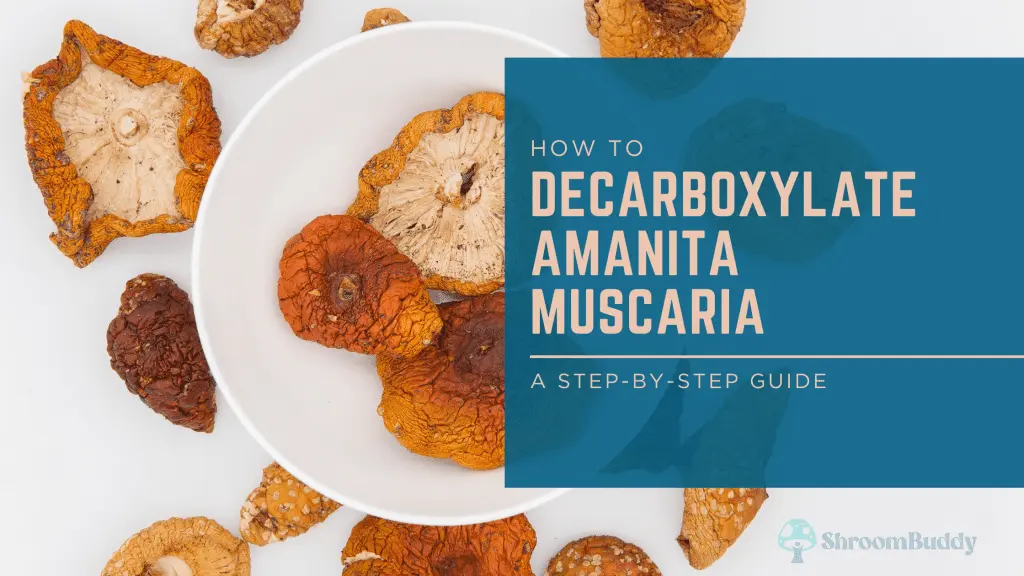
Amanita muscaria is one of the most recognizable mushrooms in the world. The bright red cap and white flecks show up in fairy tales, folk art, and centuries of traditional use across Siberia and northern Europe. It’s a striking mushroom with a long history, and it’s also one that asks for careful preparation before use.
That preparation centers on a step called decarboxylation. It sounds technical, but the idea is simple. Applying gentle, controlled heat changes the mushroom’s chemistry, converting a harsher compound into a milder one. People who prepare Amanita muscaria this way are usually looking for a calmer, more predictable experience.
Here’s what decarboxylation does, why it matters, and how to approach it thoughtfully if you decide to explore this mushroom.
What decarboxylation actually means
Decarboxylation is a chemical reaction that removes a carboxyl group from a molecule, releasing carbon dioxide along the way. With Amanita muscaria, that reaction matters because it changes which compounds are present in the finished material.
Raw Amanita muscaria is high in ibotenic acid. Through heat, much of that ibotenic acid converts into muscimol, a more stable compound that many people associate with the mushroom’s calming qualities. The science here is still catching up, and a lot of what’s described comes from traditional use and self-reported experience rather than large clinical studies. We’ll flag that throughout, because it’s an honest part of the picture.
It’s worth noting one key difference from psilocybin mushrooms. Those rely on your body to convert their compounds after you consume them. Amanita muscaria works differently. The conversion from ibotenic acid to muscimol largely depends on heat applied beforehand, which is exactly why decarboxylation is such a central step.
The two compounds that matter most
Most of what’s interesting about Amanita muscaria comes down to two compounds and the relationship between them.
- Ibotenic acid is abundant in the raw mushroom. It acts on NMDA receptors and is generally considered the more excitatory of the two. In larger amounts, it’s commonly linked to nausea, dizziness, and overstimulation, the effects most people are trying to reduce.
- Muscimol forms when ibotenic acid loses its carboxyl group during heating. It acts primarily on GABA receptors, which are involved in relaxation and calm. Many users describe muscimol-forward preparations as more sedating and more settled.
If you want to go deeper on the underlying pharmacology, the National Library of Medicine’s PubChem entry on muscimol and the StatPearls overview of Amanita muscaria toxicity (hosted on the NIH’s NCBI Bookshelf) are both solid, freely available starting points.
So the goal of decarboxylation is essentially a shift in balance: less ibotenic acid, more muscimol. Done well, that tends to mean fewer unwanted effects and a steadier experience. Done carelessly, with too much heat or not enough, you can either degrade the muscimol you wanted or leave behind more ibotenic acid than you intended.
Two ways to decarboxylate at home
There are two common methods, and both work when temperature and time are managed carefully. Neither is more “correct.” They just suit different setups and preferences.
Oven method. Spread finely chopped mushrooms on a parchment-lined baking sheet and heat at 190 to 200°F (88 to 93°C) for 30 to 60 minutes. This is the faster, more convenient route. The tradeoff is that ovens can run hot or uneven, so an oven thermometer and regular checking make a real difference.
Water bath method. Place chopped mushrooms in a heatproof jar or sealed bag and submerge it in gently simmering water in the same 190 to 200°F range for 1 to 2 hours. It takes longer, but the water holds a more stable temperature, which lowers the risk of overshooting and degrading muscimol.
If you’re new to this and want the gentlest margin for error, the water bath is the more forgiving place to start. If you’re comfortable monitoring temperature closely, the oven gets you there faster.
Temperature and timing, at a glance
Precision matters here, so it helps to keep the targets simple:
- Temperature: 190 to 200°F (88 to 93°C)
- Time: 30 to 60 minutes (oven) or 1 to 2 hours (water bath)
Go too hot and you can break down the muscimol you’re trying to preserve. Stay too cool and too much ibotenic acid may remain. Staying inside that window, and using a thermometer rather than guessing, is what makes results consistent batch to batch.
Safety notes worth taking seriously
Amanita muscaria is potent, and preparation deserves attention. A few practical precautions:
- Work in a ventilated space. Good airflow keeps things comfortable while heating.
- Use clean tools and surfaces. Treat it like any careful food prep to avoid contamination.
- Watch your temperature. Keep heat at or below 200°F (93°C) to protect potency and avoid unwanted byproducts.
- Start low. After decarboxylation, a small starting amount, around 0.5 to 1g, lets you see how your body responds before doing more.
- Store it safely. Keep finished material in an airtight container somewhere cool and dry, well away from children and pets.
One more, and it’s important: Amanita muscaria can interact with alcohol, sedatives, and certain medications. If you take anything regularly, or have an underlying health condition, talk with a healthcare professional before using it. This isn’t legal boilerplate. It’s the kind of thing that genuinely changes how a botanical affects you. If you ever suspect you’ve taken too much or are reacting badly, the Poison Control online tool and helpline are free, confidential resources worth keeping on hand.
Ways to use decarboxylated Amanita muscaria
Once the mushroom is decarboxylated, there are a few common ways to use it. Each feels a little different, so the right one depends on what you’re after.
Tea. Steeping the prepared mushroom in hot water makes a simple infusion with a gradual onset. Many people find tea the most approachable starting point because it’s easy to sip slowly and stop when you’ve had enough. Honey or complementary herbs can soften the flavor.
Tinctures. Soaking decarboxylated mushrooms in high-proof alcohol produces a concentrated liquid. Tinctures offer more precise, repeatable dosing and a long shelf life, taken sublingually or stirred into a drink.
Edibles. Folded into honey, chocolate, or baked goods, the prepared mushroom can be distributed evenly for consistent servings, and it’s a discreet, familiar way to consume.
A note on dosing. If you’re new, starting with 0.5 to 1 gram of decarboxylated material and waiting at least two hours before considering more is a sensible, measured approach. Effects vary from person to person depending on body chemistry, preparation, and format, so pay attention to how your body responds rather than rushing the next step.
A grounded approach to a striking mushroom
Decarboxylation is the step that makes Amanita muscaria more predictable to work with. By converting ibotenic acid into muscimol through careful, controlled heat, the process tends to soften the harsher edges many people want to avoid and lean into the calmer qualities the mushroom is traditionally associated with. For a broader cultural and botanical backdrop, Utah State University’s intermountain herbarium profile on Amanita muscaria is a thoughtful, well-sourced read on the mushroom’s history and natural history.
Whether you choose the oven for speed or the water bath for steadier heat, the fundamentals are the same: hold your temperature, mind your timing, start gentle, and stay curious about how your own body responds. The research here is still developing, so the most honest guidance is also the simplest. Go slow, learn as you go, and treat the material with respect.
At Purely Found, we’re here to make exploring plant medicine clearer and more trustworthy, with a curated selection chosen for quality and transparency. Not sure where to begin? Reach out to our team and we’ll help you find a starting point that fits.