
Table of contents
- What is Amanita Muscaria?
- A Brief Cultural and Natural History
- Amanita Muscaria vs Psilocybin Mushrooms
- Understanding Muscimol and Ibotenic Acid
- What is Amanita Muscaria Commonly Associated With?
- Are Amanita Muscaria Mushrooms Legal?
- Common Amanita Muscaria Product Formats
- How to Read an Amanita Muscaria Product Label
- Amanita Muscaria Safety Considerations
- Exploring Amanita Muscaria Responsibly
- Frequently Asked Questions
You’ve probably seen Amanita Muscaria without knowing its name: the bright red mushroom with white spots that shows up in fairy tales, video games, and storybook illustrations. It’s one of the most recognizable mushrooms in the world, and lately it’s been appearing in a new form, sold as gummies, capsules, and blends for adults to explore.
Before you shop, it helps to understand what this mushroom actually is, how it differs from other psychoactive mushrooms, and what to keep in mind along the way. This guide walks through the basics calmly and clearly: what’s known, what’s still being studied, and how to explore responsibly. If you’d rather browse first, you can always see the Amanita Muscaria collection and come back.
What is Amanita Muscaria?
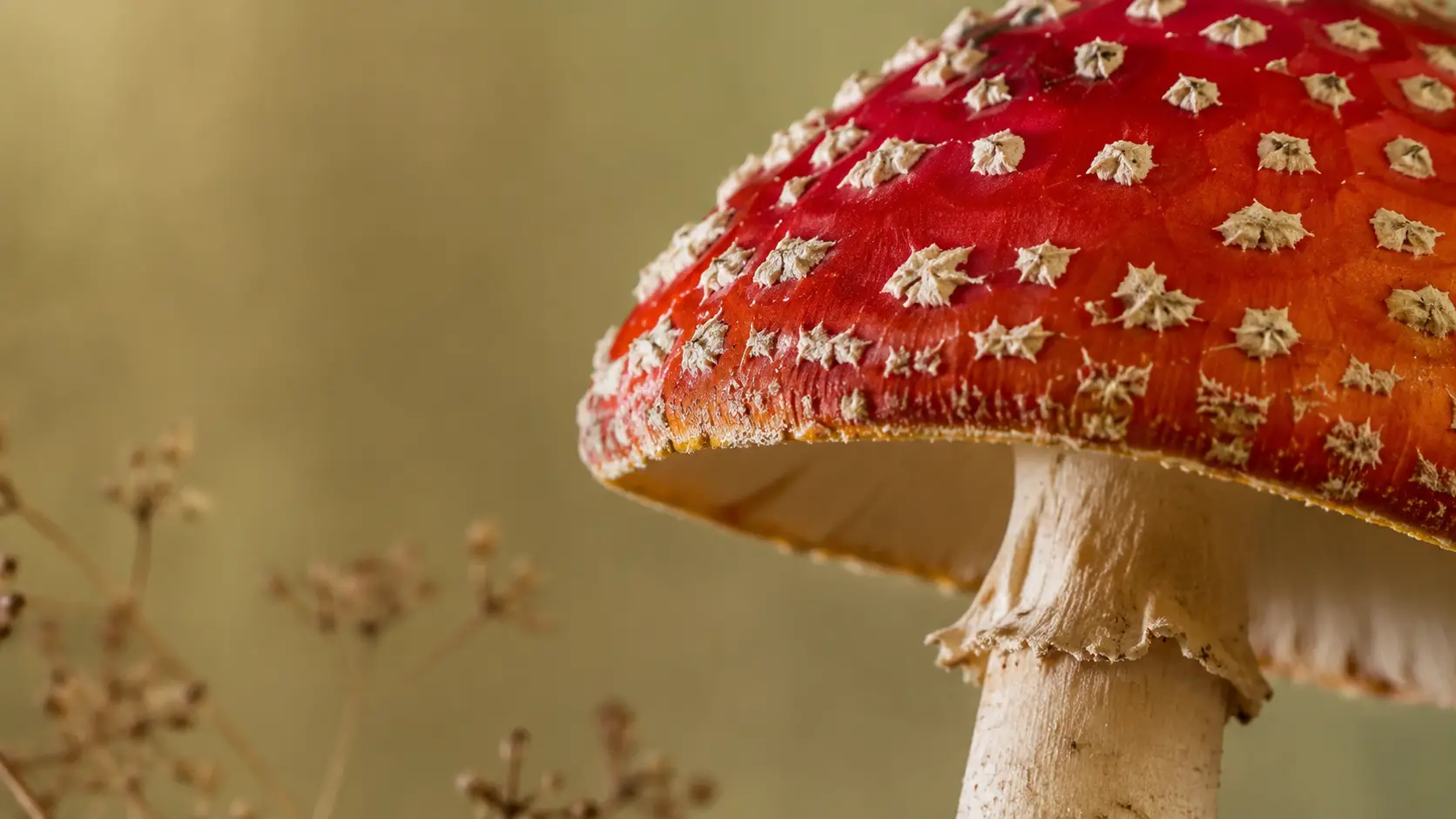
Amanita Muscaria is a wild mushroom found across much of the Northern Hemisphere, in North America, Europe, and Asia. It grows in forests, often near pine and birch trees, and it’s known for that unmistakable cap: deep red, sometimes orange, dotted with white flecks.
It’s worth being clear up front. This is not a culinary mushroom, and it’s not the same as the functional mushrooms you may have seen in coffee and supplements, like lion’s mane or reishi. Those are valued for everyday wellness support. Amanita Muscaria belongs to a different category, one with compounds that can affect how a person feels.
Why it’s also called fly agaric
You’ll often see Amanita Muscaria called the fly agaric mushroom. The name comes from an old European folk practice: pieces of the mushroom were sometimes placed in dishes of milk to attract and slow flies. “Agaric” is simply an older word for a gilled mushroom. The name stuck, and centuries later it’s still the common term you’ll find on product labels and in field guides.
Where it grows and why it’s so recognizable
Part of what makes the Amanita Muscaria mushroom so iconic is its appearance. The classic red-and-white cap is hard to mistake for anything else, which is exactly why it became a fixture in art and folklore. It tends to grow in a symbiotic relationship with certain trees, drawing on their roots while supporting them in return. That small detail says a lot about how woven into the forest it really is.
A Brief Cultural and Natural History
Amanita Muscaria has a long history of human attention. It appears in folklore and art across several cultures, and there are documented accounts of traditional use among certain communities in Northern Europe and Siberia, where it held a place in regional customs.
We mention this as history, not mystique. The mushroom’s cultural footprint is genuinely old and genuinely interesting, and it deserves to be described plainly rather than dressed up. Knowing where something comes from is part of understanding it, and part of approaching it with the respect any potent botanical deserves.
Amanita Muscaria vs Psilocybin Mushrooms
This is the most important distinction to get right. People sometimes lump all “magic mushrooms” together, but Amanita Muscaria vs psilocybin is a real and meaningful difference.
These are entirely separate mushrooms. They contain different active compounds, they’re treated differently under the law, and the experiences associated with them are not the same. Amanita Muscaria is not a type of psilocybin mushroom, and it shouldn’t be thought of as a substitute for one.
Different compounds, different category
Psilocybin mushrooms, the ones most people mean when they say “magic mushrooms,” contain a compound called psilocybin. Amanita Muscaria does not. Instead, it contains two different compounds: muscimol and ibotenic acid. Because the active ingredients are so different, treating these mushrooms as interchangeable is a mistake. They’re best understood as two distinct things that happen to share a casual nickname.
Understanding Muscimol and Ibotenic Acid
Here are those two compounds in plain language. The science is still developing, so we’ll stick to what these substances are, not what they do for your health, because those claims aren’t something anyone can responsibly make right now.
What muscimol is
Muscimol is the compound most modern Amanita Muscaria products focus on. It’s the substance considered primarily responsible for the mushroom’s psychoactive character. When a product describes its “active” content, muscimol is usually what’s being referenced. Research into muscimol is ongoing, and the science is still catching up.
What ibotenic acid is
Ibotenic acid is the second compound, and it’s closely related to muscimol. In the raw mushroom, ibotenic acid is present in larger amounts, and through certain processing methods it can convert into muscimol. This is one reason sourcing and preparation matter so much: how a mushroom is handled affects what ends up in the final product. It’s also a good reminder that the raw mushroom and a finished product are not the same thing, and shouldn’t be treated as such.
What is Amanita Muscaria Commonly Associated With?
When people ask about Amanita Muscaria effects, they’re usually asking what the experience feels like. Here’s where honesty matters most.
The experience is often described as dreamlike or calming in character, and traditionally it’s been associated with altered perception. But effects can vary widely from person to person, and they depend heavily on the product, the serving size, and the individual. Nothing is guaranteed, and we won’t pretend otherwise.
What we can say is that this is a mushroom worth approaching with patience and attention rather than expectation. If you do explore it, the most useful posture is curiosity paired with care: paying attention to how your body responds rather than chasing a specific outcome.
Are Amanita Muscaria Mushrooms Legal?
A common question: are Amanita Muscaria mushrooms legal? The short answer is that, in the United States, Amanita Muscaria is not currently a federally scheduled substance, which is part of why legal mushroom gummies and similar products have become more widely available.
That said, the picture is more nuanced than a simple yes. Regulations vary by state and can change over time, and at least one state has moved to restrict it. The U.S. Food and Drug Administration has also issued guidance regarding Amanita Muscaria and its constituents in food, noting it is not an approved food additive. Because the legal landscape shifts, it’s worth checking the rules where you live before purchasing.
Purely Found does not ship to states where these products are restricted. Always confirm your local regulations before ordering.
Common Amanita Muscaria Product Formats
Most people encounter this mushroom not as a wild find but as a finished product. Amanita Muscaria products come in several formats, and they differ in how convenient and how familiar they feel. You can browse the range on the Amanita Muscaria category page.
Gummies and capsules
Amanita Muscaria gummies are among the most popular formats, largely because they’re familiar and easy to portion: the serving size is set by the product rather than left to guesswork. Capsules work similarly, offering a no-fuss option for people who’d rather skip the flavor. You’ll find these formats in products like Road Trip Gummies and TRE House mushroom products, among others. As with any mushroom gummies, the label is your most important reference point.
Extracts and mushroom-inspired blends
Beyond gummies, you’ll also see extracts and mushroom blends that combine Amanita Muscaria with other ingredients. These mushroom-inspired products can be appealing, but proprietary blends are exactly where label literacy becomes essential, because “blend” can mean very different things from one brand to the next. That brings us to the next, and arguably most useful, section.
How to Read an Amanita Muscaria Product Label
If you take one practical thing from this guide, let it be this: read the label carefully. Transparent products make this easy. Vague ones don’t. Here’s what to look for:
- A clear ingredient list. You should be able to see exactly what’s inside, not just a mystery “proprietary blend” with no detail.
- Named compounds. Look for whether muscimol or ibotenic acid content is specified, rather than left undefined.
- Third-party testing. Independent lab testing signals that a company is willing to verify what’s in its products.
- Clear serving information. A responsible product tells you its serving size plainly.
- Company transparency. Contact details, sourcing information, and an accessible website all point to a brand that stands behind what it sells.
The more open a brand is, the easier it is to make an informed choice. When information is missing, that absence is information too.
Amanita Muscaria Safety Considerations
Let’s be direct, because Amanita Muscaria safety deserves a plain conversation. This is a potent botanical, not a casual snack, and it’s not something we’d describe as safe, risk-free, or a wellness solution. The U.S. Centers for Disease Control and Prevention has documented adverse events linked to certain mushroom products, which is part of why care and quality matter.
Here’s responsible guidance to keep in mind:
- Follow the product’s directions and stated serving size. The label sets the terms, so stick to them.
- Avoid mixing with alcohol or other substances. Combining things adds unpredictability, and that’s the opposite of what you want.
- Keep products away from children and pets. Gummies in particular can be mistaken for candy, so store them securely.
- Start gentle if you’re new. Pay attention to how your body responds, and give yourself room to learn.
- Consult a qualified healthcare professional. If you take medication or have health questions, talk to someone who knows your situation before exploring.
- Choose tested, transparent products. Quality and sourcing aren’t side details. They’re the foundation.
None of this is meant to scare you. It’s meant to help you explore with clear eyes.
Exploring Amanita Muscaria Responsibly
Amanita Muscaria is one of the more striking botanicals you can explore: visually iconic, culturally interesting, and genuinely different from the psilocybin mushrooms it’s often confused with. It’s also a category where the details matter. The compounds, the formats, the labels, and the local rules all deserve a careful look.
If you decide to explore, start gentle, read carefully, and let curiosity lead. There’s no rush, and there’s no wrong place to begin.
Explore the Amanita Muscaria collection
Frequently Asked Questions
What is Amanita Muscaria?
Amanita Muscaria is a wild mushroom recognized by its red cap and white spots, found across the Northern Hemisphere. It contains the compounds muscimol and ibotenic acid and is different from culinary and functional mushrooms.
Is Amanita Muscaria the same as psilocybin?
No. They’re different mushrooms with different active compounds. Psilocybin mushrooms contain psilocybin, while Amanita Muscaria contains muscimol and ibotenic acid. They aren’t interchangeable.
Are Amanita Muscaria mushrooms legal?
In the U.S., Amanita Muscaria is not currently federally scheduled, but rules vary by state and can change. The FDA has issued guidance on its use in food. Check your local regulations before purchasing.
What are muscimol and ibotenic acid?
They’re the two primary compounds in Amanita Muscaria. Muscimol is the one most modern products focus on, and ibotenic acid is a closely related compound that can convert into muscimol during processing.
What should I look for in an Amanita Muscaria product?
Look for a clear ingredient list, specified compound content, third-party lab testing, clear serving information, and a transparent, contactable company.
Is Amanita Muscaria safe?
We don’t describe it as safe or risk-free. If you explore it, follow product directions, avoid mixing it with alcohol or other substances, keep it away from children and pets, and consult a qualified healthcare professional about your personal situation.
This article is for educational purposes only and is not medical advice. These statements have not been evaluated by the Food and Drug Administration. These products are not intended to diagnose, treat, cure, or prevent any disease.